“By expanding the city’s propane fleet using FTA funding, the city can save on the cost of vehicles, reduce emissions, and move closer to its climate goals.”
Battle Creek Could Go Green with Propane
Battle Creek Has Sustainability Goals. Propane Can Help Reach Them.
Battle Creek has already made sustainability a priority. The city’s Environmental Sustainability Plan, adopted in 2019, calls for cleaner operations and lower-emission transportation. That makes sense for a city working to improve air quality, manage costs, and keep public services dependable.
Propane is already a practical part of Michigan’s energy mix. Across the state, it serves hundreds of thousands of homes, thousands of farms, and more than 30,000 fleet vehicles.
In Battle Creek, local propane Ferrellgas general manager Travis Parker has pointed to it as a realistic way to cut emissions without putting more pressure on the electric grid. Battle Creek’s primary electric utility is Consumers Energy; a recent supplier-specific factor for its Michigan power is about 0.583 kg CO₂e/kWh, meaning that electrification alone will not eliminate emissions.
Propane Vehicles Cleaner Than EVs
Propane is recognized by the EPA and U.S. Department of Energy as a clean energy source, and it offers a lower-emission option for vehicle fleets that need to operate reliably every day. In practical terms, that means propane can help cities reduce greenhouse gas emissions and other harmful pollutants (especially considering renewable propane) while still using proven, available vehicle technology. Bottom line: Propane-powered generators emit 35% less carbon.
That matters for Battle Creek. The city’s sustainability plan supports upgrading fleets to lower-emission vehicles. Propane aligns with that goal without requiring the same charging infrastructure buildout and grid dependence as full electrification.
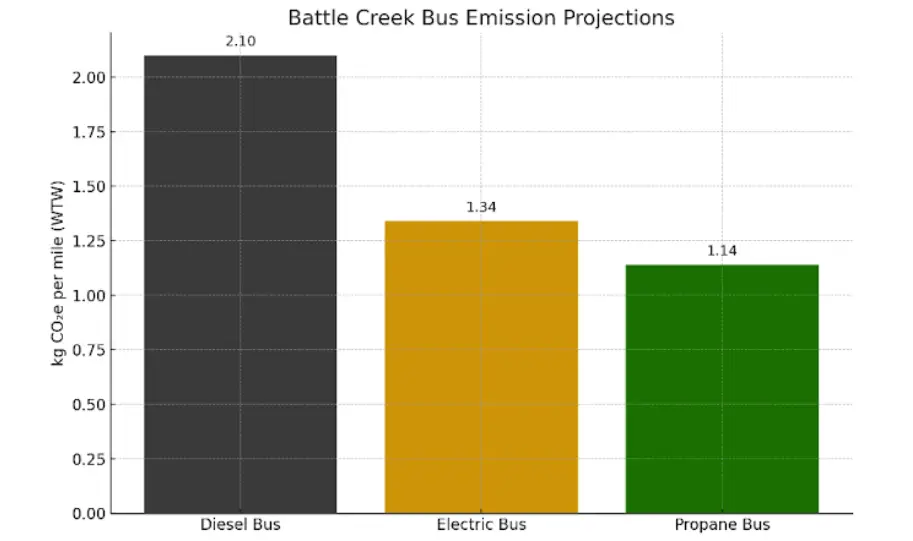
Click Image to Enlarge
Battle Creek Does Not Have to Start From Scratch
Propane buses are not a new idea for the city.
The City’s plan calls for practical, service-first solutions across departments—propane standby power and backup heat fit that brief.
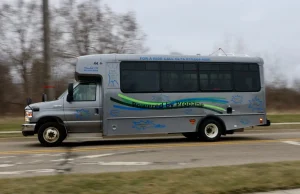
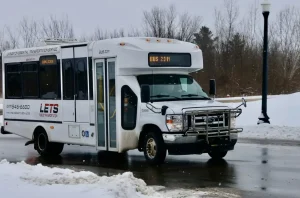
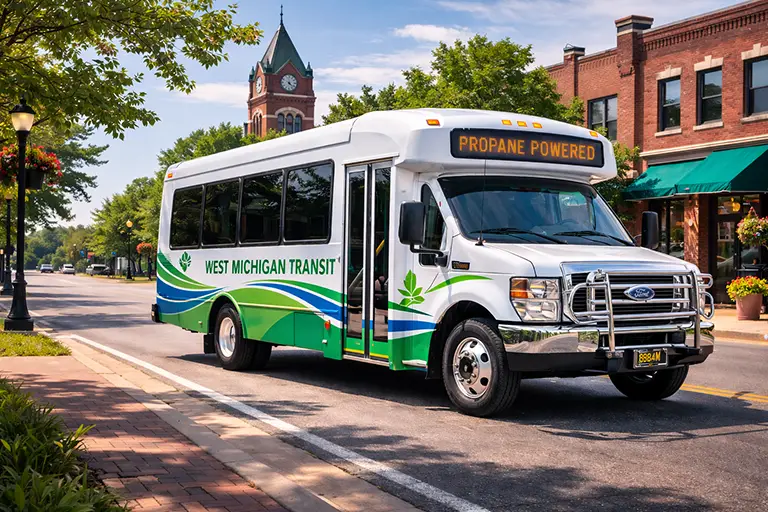
Battle Creek has already used propane in transit. In 2015, the city announced new propane-fueled buses, citing cost savings, a smaller environmental footprint, and the addition of a propane fueling station. In 2016, the city highlighted that those propane transit buses had been on the road for more than a year and that Battle Creek had added its own permanent propane filling station. It just makes sense for a northern state like Michigan, since propane vehicles outperform electric vehicles (EVs) in cold climates.
That is important because it shows propane is not just a theory for Battle Creek. It is a fuel the city has already put to work.
Lower Fuel and Maintenance Costs Matter Too
Cleaner transportation is important, but so is affordability.
One of propane’s biggest advantages is that it can lower both fuel and maintenance costs compared with gasoline and diesel. Just look at the city of Flint, which saved more than $4 million in fuel costs over the first five years using propane. Propane buses also emit fewer greenhouse gases, nitrogen oxides, and particulate matter than gasoline-, diesel-, or electric-powered vehicles.
For a city balancing budgets and fleet needs, that combination matters. A lower-cost vehicle solution that also supports emissions goals is worth serious attention.
Sustainability Should Include More Than One Path
Battle Creek, like many communities, is under pressure to think about electrification. But sustainability does not have to mean relying on only one strategy.
Electric vehicles may not have tailpipe emissions, but the electricity used to charge them still comes from the grid, and Michigan’s grid continues to rely heavily on fossil fuels. That does not mean EVs have no role to play. It means cities should keep a broad view of what cleaner transportation can look like.
Propane gives Battle Creek another option: one that is lower-emission, proven in fleet service, and less dependent on new charging infrastructure.
Federal Funding Can Help Battle Creek Move Faster
There is also a funding opportunity here.
The Federal Transit Administration funding can be used by Battle Creek to expand or replace its fleet with propane vehicles and to support propane fueling infrastructure. Battle Creek has also received federal bus and bus-facility support in the past, showing that outside funding is already part of the city’s transit development story.
That creates a practical path forward. If Battle Creek wants to cut costs, reduce emissions, and keep transit dependable, propane is a solution that aligns with local sustainability goals and available federal funding opportunities.
A Balanced Energy Strategy for Battle Creek
Battle Creek’s sustainability work is real, and its transportation goals are worth supporting. Propane belongs in that conversation.
It is already used across Michigan. Battle Creek Transit has already used it. It offers a cleaner alternative to conventional fuels, lower operating costs, and a path that can work alongside broader city sustainability efforts.
If Battle Creek wants a cleaner fleet strategy that is practical, affordable, and available now, propane deserves a closer look.
Learn More About Propane’s Role in Clean Energy
Explore how renewable propane fits in Michigan’s transition at MiCleanPropane.com. For fleet insights and cost-saving calculators, visit MiAutoGas.com.