Gwinn Area Community Schools Prove Propane School Buses Work

Gwinn Runs Cleaner
- Propane School Bus Fleet – 12
- Savings: Fuel Cost and Emissions
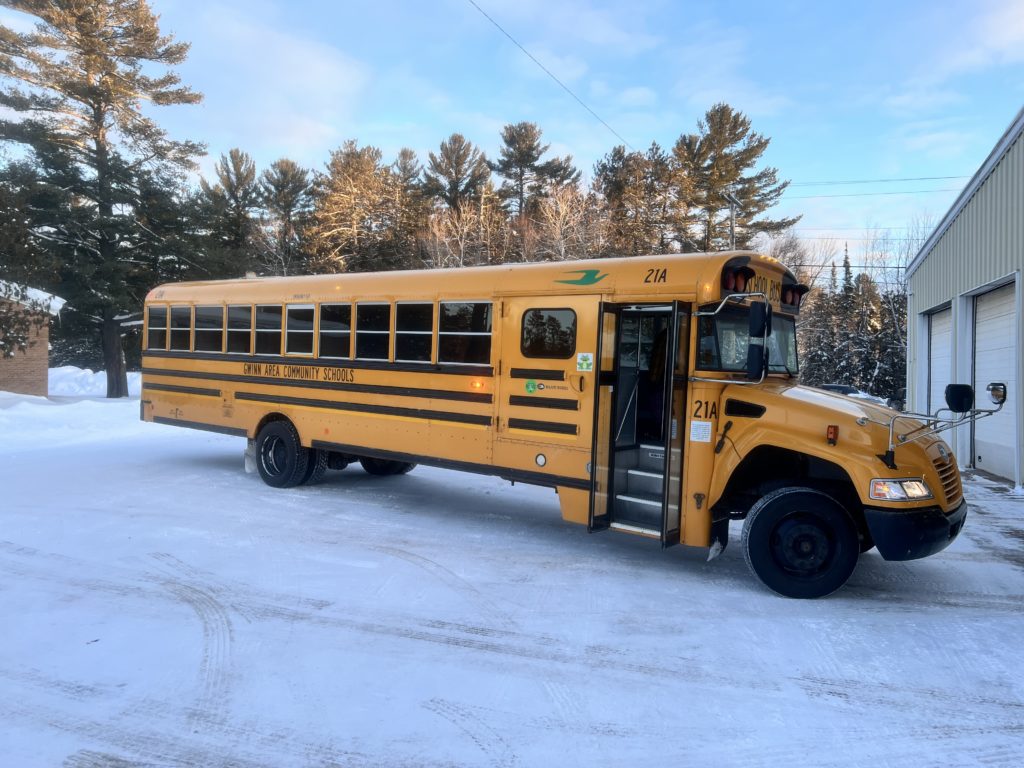
In 2017, Gwinn Area Community Schools made the bold decision to cut fuel costs and emissions by transitioning to propane-powered school buses. These buses average 13,000 miles per bus annually, transporting students for pickups and drop-offs at school, field trips, and sports team activities.
Pete Dohrenwend, Gwinn’s Transportation Director, stated, “We have a lot of the trips. They’ll be throughout the Upper Peninsula, and they’re 3 or more hour trips. We can do trips out to [places] like from here to Fayette, in the Garden Peninsula, and back. We go all the way to Wisconsin. Not a problem,” Dohrenwend mentioned. “If the round trip is around 300 miles total, 350, then we can take the propane bus pretty comfortably.”
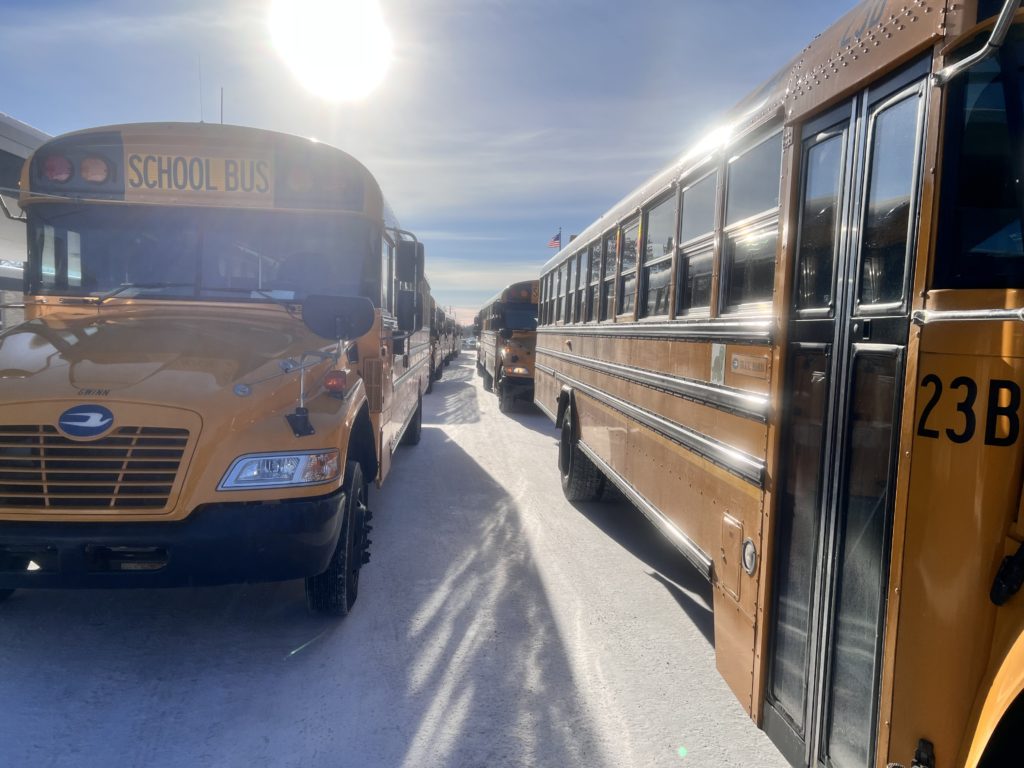
Gwinn Area Community Schools is the only district in the Upper Peninsula that uses propane in its fleet, currently operating 12 propane-powered school buses out of 16 buses.
“The convenience, the cost savings, and just warm buses in the winter, it just really works for us,” said Dohrenwend.
Proven Performance in Upper Peninsula Winters
Although Gwinn keeps their buses inside at night, Gwinn’s propane buses start reliably even on the coldest Michigan mornings—without the need for costly engine block heaters, fuel additives, or backup generators that diesel and electric buses often depend on. This simplicity reduces downtime and ensures safer, more consistent transportation for students.
Dohrenwend discussed their propane school buses when it comes to U.P. winters, “They do really well here in the winter. We’re just driving in it [snow] today. The buses work great for us. I don’t see any difference. They start, they run, they’re really warm,” he joked, “they’re almost too warm sometimes. You have to adjust the heat. There’s a valve and a heat pump that you can regulate. I would not hesitate if someone wants to ask me about the buses performing in the winter. They perform great.”
NOAA data consistently show annual snowfall totals in the 120–150-inch range for central Marquette County communities such as Gwinn. When asked about how the propane buses handled the snow, Dohrenwend responded, “So we had a storm in November and, you know, the roads around the school had 3 to 4 inches of snow, but then out in the outlying areas, anywhere between 8 to 12 inches, and the buses just, they went through no problem.”
“They’re warm. The bus is great for kids when they get on. And they’re just fantastic.”
Propane–Lower Fuel Costs, Higher Efficiency
Click to Enlarge
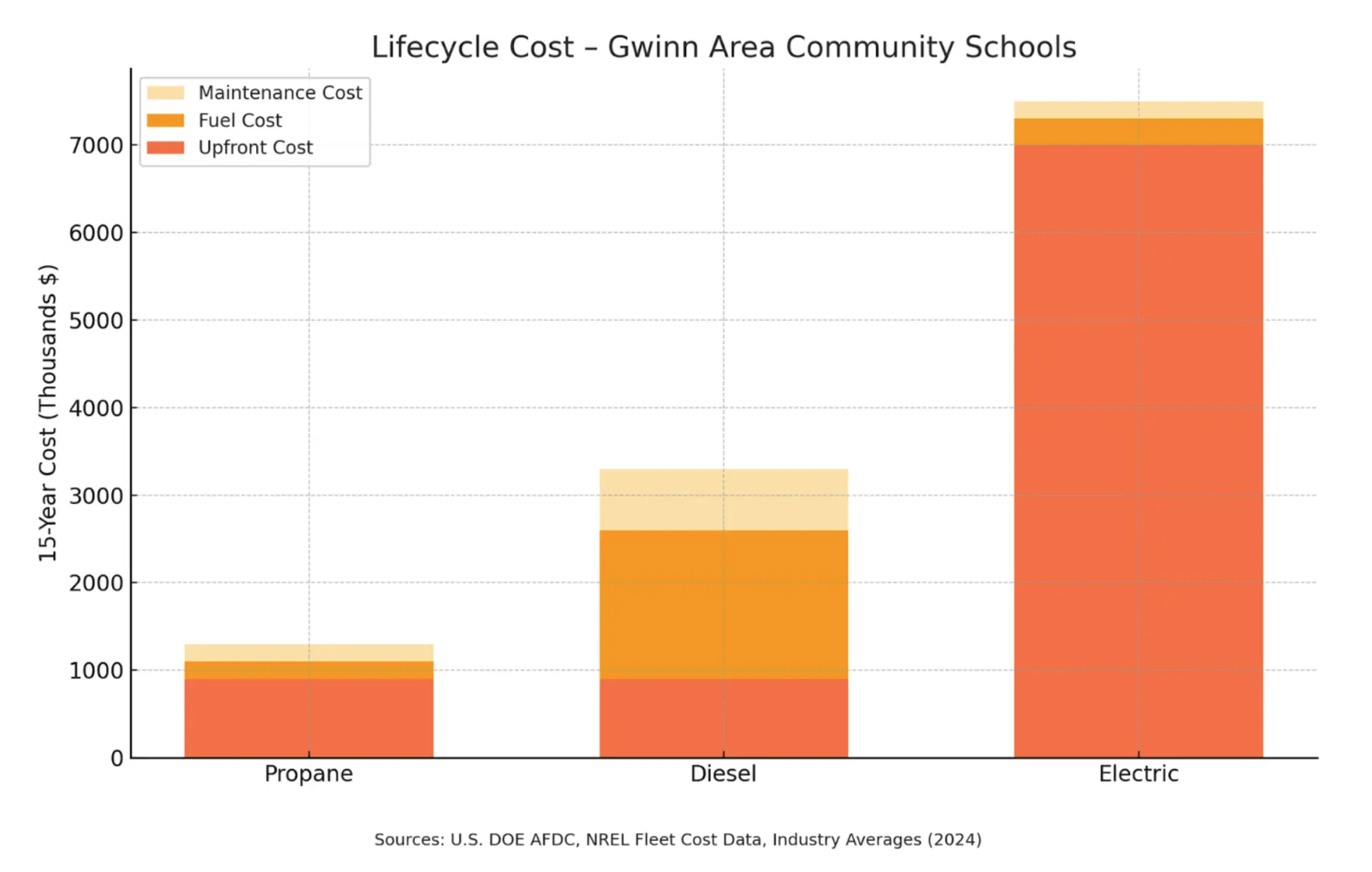
Propane is an incredibly affordable option for school transportation. Compared with diesel-powered buses, propane buses cost less to fuel and maintain. For Gwinn, that means more budget can be allocated to classrooms and student programs—rather than transportation costs.
Propane bus fleets require less maintenance than diesel models. Low-carbon fuel equals low-carbon buildup in the engines.
Dohrenwend stated in a recent interview with the Michigan Propane Gas Association, “We save about $1,300 per bus when compared to a similar diesel bus. Our biggest cost is in the savings of the fuel. So right now, diesel’s $3.39, and our propane is $1.35 per gallon. For each mile we drive with a propane bus, we’re saving about $0.10- $0.15. And when you calculate that out, we probably save about $15,000- $20,000 a year in fuel by switching to propane for a number of buses.”
With fewer oil changes, no diesel particulate filters, and no DEF treatments, the district benefits from reduced service costs and more consistent fleet uptime.
“Yeah, working on the propane and diesel are very similar. He [the mechanic] said it is a little different skill set. But for the most part, if you can work on a diesel bus, you can work on a propane bus. We have an excellent mechanic here. Top notch. I feel totally confident with his skillsnd he was able to make the transition without a problem,” says Dohrenwend.
Cleaner, Lower-Emission Transportation
Propane is a nontoxic, low-emission fuel that won’t contaminate air, soil, or groundwater. It’s the third most widely used transportation fuel in the world—right behind gasoline and diesel—and is officially recognized as an alternative fuel under the Energy Policy Act of 1992.
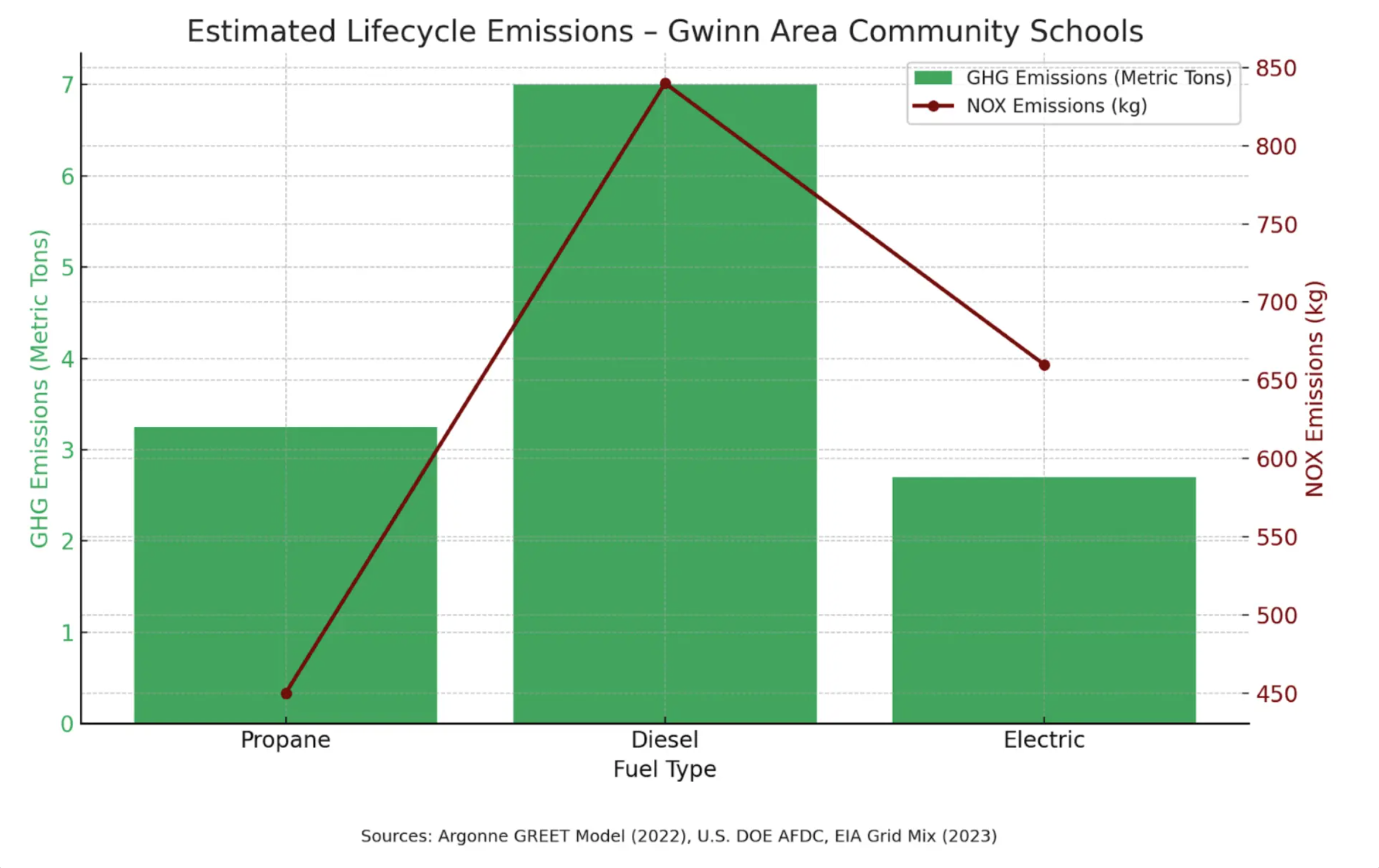
According to the U.S. Department of Energy Alternative Fuels Data Center (AFDC), propane buses emit up to 96% less nitrogen oxides than diesel buses. These harmful pollutants are associated with respiratory issues, particularly in children. By switching to propane, Gwinn helps protect student health while reducing its carbon footprint.
Click to Enlarge
Dohrenwend reported that Gwinn is saving over 50,000 pounds of CO2 annually by using propane buses instead of diesel, equivalent to avoiding the emissions from driving a diesel school bus from Gwinn to Lansing and back nearly every week for an entire school year or more than 35 times.
“I think people have their reasons why that’s like their most important reason for our district is saving money. But on the flip side, knowing that we’re producing less emissions is really, that’s really important to me. And I think that’s really helpful that we’re doing that. I would recommend propane to any district looking to upgrade their fleet, no problem. We have some of the largest districts, so it is nice to drive around and know that our emissions are super low in the communities that we’re driving.”
“ I love propane school buses: 1. Our propane buses produce lower emissions compared to diesel. The ease of filling them up when you have the infrastructure on site, and with the tank right on site. It's really easy for my drivers and the transportation folks to fill them up. And I will say, they perform really well in the UP weather conditions. They're just fantastic.”
–Pete Dohrenwend,
Transportation Director
Safe Transport, Powered by Propane
Propane-powered school buses offer drivers and passengers a quieter ride than diesel-powered buses. They can hear the students inside the bus, unlike a diesel, which produces a lot of engine noise.
Propane fuel tanks are engineered for safety. Constructed from carbon steel, they’re 20 times more puncture-resistant than gasoline or diesel tanks. Each tank is built to meet rigorous standards set by the American Society of Mechanical Engineers, ensuring long-lasting durability for student transportation.
Propane also offers added safety at the pump. With a narrower flammability range than gasoline or diesel, the risk of accidental ignition is lower. On top of that, every propane fueling station features a built-in lock-off valve that automatically stops fuel flow if a pressure drop is detected—providing an extra layer of protection for school fleets.
Propane: The Easy Upgrade for School Fleets
Transitioning a fleet to propane is straightforward.
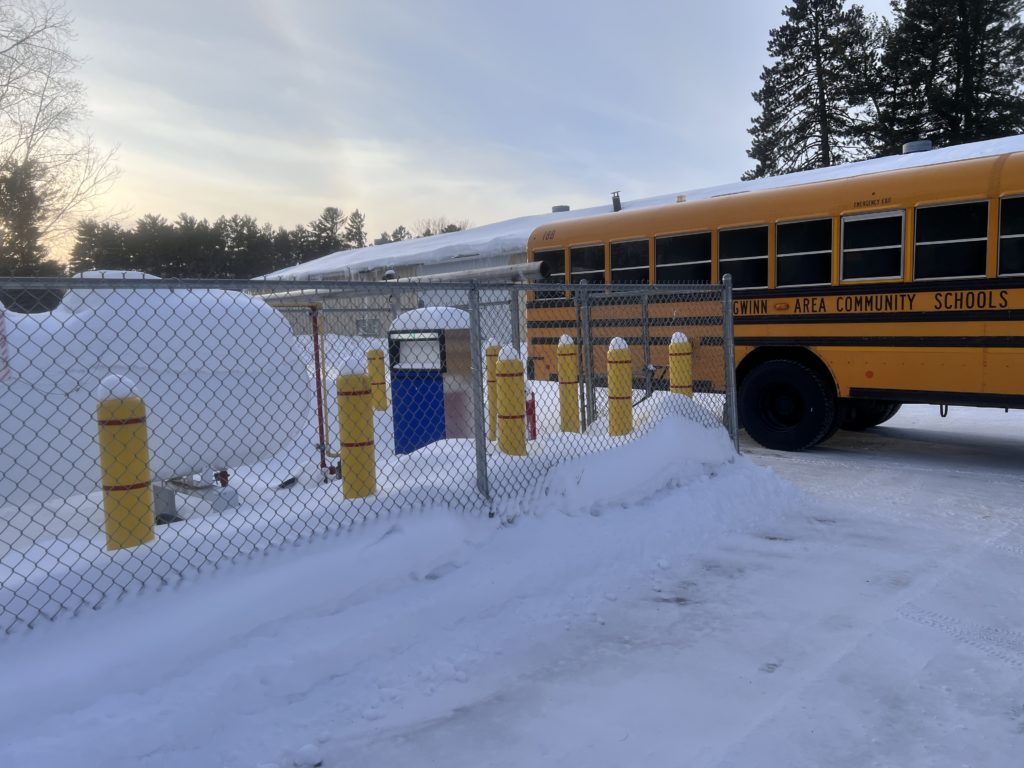
According to Dohrenwend, “It’s super easy to install the infrastructure. It was very easy for us because the company that sold us the skid unit, essentially the tank, they were able to survey the area, pour the concrete, and then they just brought the tank and placed it and installed all the infrastructure for it. Not a problem. We get the thousand-gallon tank filled approximately three times per week. Our distributor comes and fills it up. It’s just right on site. And I think that that’s a super positive. It works for us.”
Schools can start by contacting their local propane company to procure a propane contract and have a propane storage tank installed on-site. Additional fueling options available to schools include using public fueling stations and mobile fueling services. Gwinn started with one 1,000-gallon tank, but as their propane fleet grows, they are considering a second tank to meet their fuel needs. Read more cost-saving fueling options at MPGA’s website: MiAutogas.com
Dohrenwend reported fueling a propane school bus: “It’s really easy to fill a propane bus. That’s probably one of the biggest benefits for us: it’s just really convenient. It’s right next to the garage. The bus could pull up and fill the tank. I would you say that filling a propane bus is as easy as if you were to go to a gas station. It’s easy, if not easier. The bus drivers love the convenience,” he also mentioned, “usually our drivers fill up at the halfway mark. So usually they’re putting anywhere between, I would say 40 and 65 gallons of propane at any, any one given fueling.”
He stated that there is training when it comes to filling a propane bus, but it is pretty easy for his bus drivers, “It’s easy, super easy. I would say two minutes. It’s just essentially just how to screw the nozzle on, how to screw it off, make sure that when it’s activated, and you’re fueling the bus that you hear the different sound when the bus is full. Then you’re close by, that you turn the pump off to release and then release the handle, the nozzle. Any one of your bus drivers can actually just fill up a bus.”
$6,000 Available from the Michigan Propane Gas Association
The Michigan Propane Gas Association is offering fleets up to $6,000 to help them immediately reduce transportation operation costs and reach carbon footprint goals. The MPGA propane fleet experts are available to support a smooth transition to propane for fleet directors/managers, treasurers, and superintendents.
Learn more at: MiAutogas.com/#funding
In Michigan, more than 700 propane school buses are in operation across over 40 districts—delivering a fuel option that’s both reliable and budget-friendly.